.jpg)
The White Elephant Effect — And Why You Might Be Stuck with One
Let’s be honest: most of us are holding on to something that no longer fits our lives. An old plan. A job that used to excite us. A relationship that looks great from the outside but leaves us drained. We don’t always know what to call it, but here’s the name psychology gives it: the White Elephant Effect.

What Is a White Elephant Effect?
The term goes way back. In some parts of Asia, white elephants were seen as rare and sacred. So rare, in fact, that kings would sometimes gift them to people they didn’t like—because taking care of a white elephant was ridiculously expensive. You couldn’t sell it, use it for work, or say no. It was a burden dressed as a blessing.
In modern life, white elephants aren’t animals. They’re the things that quietly cost us — our time, our energy, our peace — while looking “too valuable” to let go.
Real-Life Examples of White Elephant Effect
A career you chose years ago that no longer feels like you
That luxury item you never use but feel guilty selling
A relationship that’s mostly held together by history and fear of what others might say
A business idea, degree, or habit that served you once — but now just sits there, emotionally dusty
They’re not bad things. They’re just not the right things anymore. And yet, we keep feeding them with our energy because… well, we’ve already come this far, right?
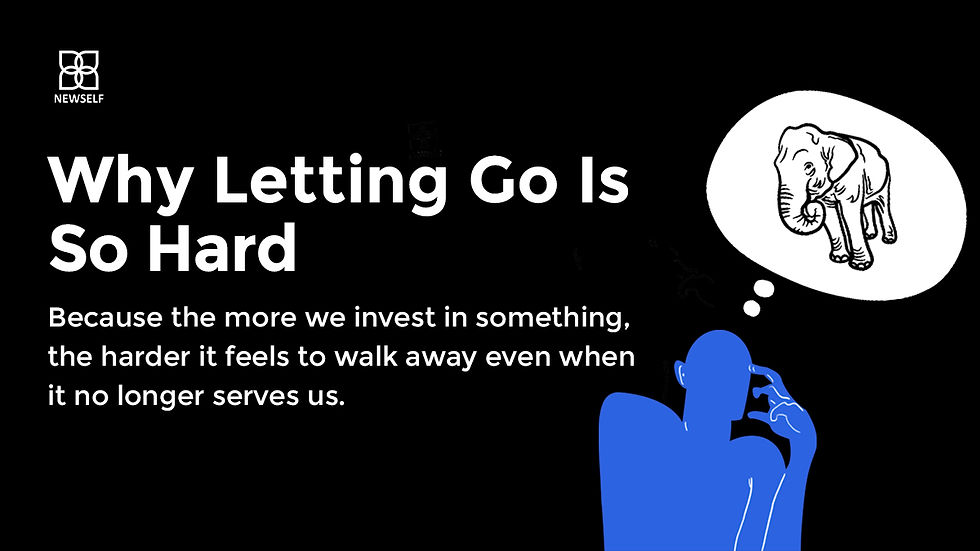
Why Letting Go Feels So Damn Hard
This is where psychology comes in.
There’s something called the Sunk Cost Fallacy — the idea that the more you’ve invested in something, the harder it is to walk away. It makes you think, “I’ve already spent so much time/money/effort on this, I can’t just leave it now.”
Sound familiar?
You might’ve heard:
“I’ve been in this relationship for five years, I can’t give up now.” “If I leave this career, what will everyone think?” “I’ve already invested too much.”
But here’s the uncomfortable truth: keeping something that no longer serves you doesn’t make the past worthwhile — it just keeps you stuck in it.
Ask Yourself These 3 Questions
Ready to figure out if you’re holding a white elephant? Try this:
If I didn’t already have this, would I actively choose it today?
Is this bringing more peace, or more pressure?
Am I holding onto it for me — or because of what others expect?
These aren’t easy questions. But they’re worth asking.
Letting Go Isn’t Giving Up — It’s Growth
Some things we outgrow. And that’s okay.
Think about it like this: you wouldn’t keep an old phone charger if you’ve changed phones — even if it still technically works. Same with emotional clutter. Just because something once mattered doesn’t mean it still should take up space.
One user told us:
“I felt like I was still paying for a car I didn’t even drive anymore. Emotionally, mentally — it was exhausting. Once I realized that, I could finally walk away.”
Letting go doesn’t mean it never mattered. It just means you’re making space for something that fits who you are now.
Newself Can Help You See the Pattern
We built Newself for moments like this.
Track your emotional patterns
Reflect on what’s still adding value — and what’s quietly weighing you down
Get matched with therapists who understand your journey
Take small, meaningful steps toward a life that fits you better
No pressure. Just clarity.


Comments